
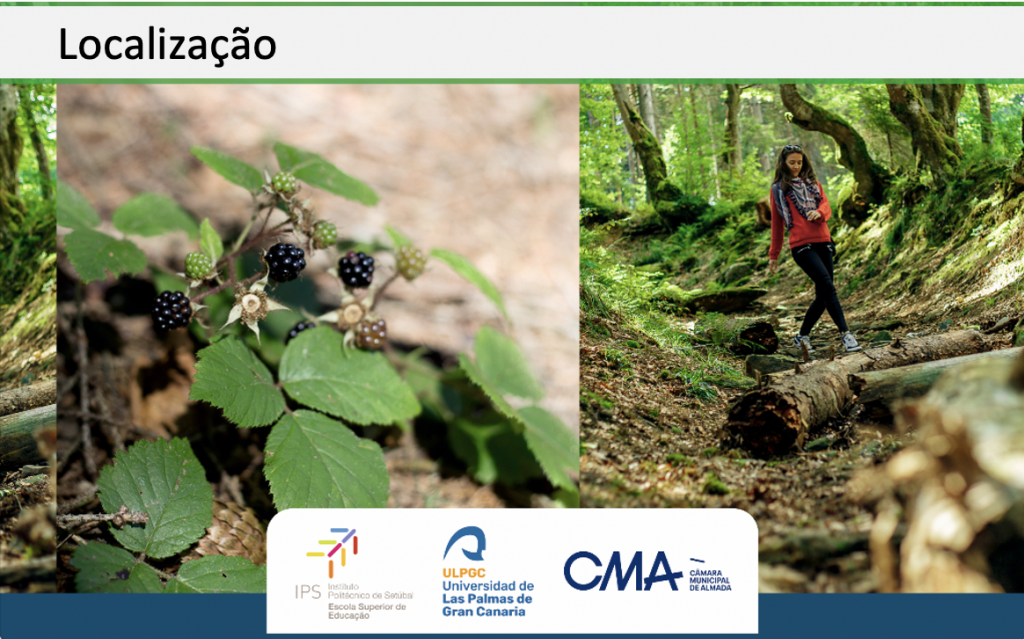
The District of Setúbal, as a whole, has an extraordinary inventory of tourist attractiveness centers designed with and without the intention of attracting visitors, of exuberant nature, captivating corners, calm and peaceful environments, in addition to a significant history, gastronomy and preserved cultural traditions. for centuries. Clearly identifiable strengths for the promotion of Active Tourism, Nature, Adventure and Rural, which represent very significant competitive advantages and opportunities, due to the existing climate in the territory, calm and pleasant throughout the year and the proximity of Lisbon.
Currently, there is an emerging demand for new tourist trends focused on the preservation of tangible and intangible heritage, the defense of the natural environment and the responsible and sustainable economic development of tourist destinations. Active Tourism, of nature and rurality for different tourist destinations, can be an extraordinary and effective strategy for the conservation and preservation of the environment, by uniting the virtuous triangle between nature and its preservation, development in an economically responsible and sustainable way. economic and social equity, in addition to favoring the continuity of supply and demand throughout the year and reconciling the effects caused by Covid-19, which is a high challenge in the 21st century. On the other hand, sport and tourism have evolved through adaptive and transformational processes resulting from the improvement of the quality of life and the increase in the free time of the populations to which the Industrial Revolution contributed and the consequent emergence of the society of leisure and consumption. Its practices foster human development, sharing cultural objectives and healthy lifestyles, as well as promoting peace between nations and the quality of life of the people, a source of inspiration to convert dreams into reality.
The social practices resulting from the relationship between sport and tourism assume a high cultural, social and economic importance in contemporary society. Those who operate in their markets are aware that behind the performance of results in tourism, sports, recreation and leisure and recreation, there are highly competent organizations, infrastructures and human resources, which provide services whose acceptance social is unambiguous.
Accordingly, given the emergence of new paradigms in the mentioned areas, which support and differentiate tourist destinations, products and markets of high economic importance, we consider it pertinent to continue to invest in the realization of an international congress that contributes to the debate of themes related to tourism and sport.
In this context, the Higher School of Education of the Polytechnic Institute of Setúbal with the Faculties of Sciences of Physical Activity and Sport and Economics, Enterprise and Tourism of the University of Las Palmas de Gran Canaria, as well as with the Municipality of Almada, will carry out on the 23rd, 24th and 25th of September 2021, in Almada, the 2nd Edition of the “International Congress on Active Tourism, Sport, Nature and Sustainability”.
CHARACTERIZATION OF THE ENTITIES INVOLVED IN THE EVENT
The Polytechnic Institute of Setúbal (IPS) is a public higher education institution that is part of the polytechnic subsystem.
The IPS arises within the scope of the creation in Portugal of the new polytechnic higher education network in 1979, initially integrating the two Schools located in Setúbal; the School of Technology (ESTSetúbal) and the School of Education (ESE). Currently, the IPS includes, in addition to these, three more Higher Schools: the School of Business Sciences (ESCE), the Barreiro School of Technology (ESTBarreiro) and the Health School (ESS). The activities of the five Higher Schools are coordinated by the Central Services. There is also a sixth organizational unit, oriented towards student support: the Social Action Services (SAS), responsible for accommodation, food, psychological support and sports and recreational activities.
As a public institution, the IPS has the State as its main financier, through funds entered in the State Budget, which are complemented with its own income from tuition fees, research contracts and services abroad. The recruitment, selection and evaluation of teaching staff, and non-teaching technical and administrative staff, are framed by the respective career statutes, as well as other central regulations designed for all civil servants. In turn, the recruitment of staff, both in numbers and in category, is also limited by law and budgetary constraints.
The Escola Superior de Educação de Setúbal (ESE/IPS) began its activity in 1985 aimed at the initial and continuous training of teachers. Later, the need to respond to the training expectations of the region in which it operates led ESE/IPS to a progressive process of turning to other scientific/professional areas and consequent diversification of the training offer.
ESE/IPS is, moreover, a school where culture is an integral part of everyday life, with multiple exhibitions, shows, workshops and debates on current issues. Above all, it is a school where people are the priority and, therefore, it prides itself on having a welcoming, open, plural and supportive environment.
In addition to degrees, ESE/IPS offers master’s, postgraduate and continuing education programs.
The School of Business Sciences (ESCE/IPS) was created in 1994 and has always sought to create a differentiation strategy, focusing on quality education, supported by new technologies and oriented towards the reality of the business fabric.
The objective of ESCE/IPS is to train flexible, dynamic professionals who combine general management knowledge with specialization in a certain domain (accounting, finance, human resources, marketing, information systems or logistics).
In addition to the degrees, ESCE/IPS offers a set of masters and postgraduate degrees that allow students to continue their higher education and enhance their academic skills.

The ULPGC was founded in 1989. Despite its youth, in a few years it has managed to position itself as one of the main Spanish universities, standing out in the use of new technologies, in research related to the marine and maritime areas, in the programs international mobility and its close involvement with the local society, with healthy finances and high scientific productivity. The ULPGC has six Campuses, three of which are located in Las Palmas de Gran Canaria; one in the municipal terminus of Arucas (Gran Canaria) and others in the islands of Lanzarote and Fuerteventura.

The Portuguese Institute of Sport and Youth, I.P. (IPDJ) is mission to implement an integrated and decentralized policy for the areas of sport and youth, in close collaboration with public and private entities, namely with sports bodies, youth associations, students and local authorities.
The IPDJ intervenes in the definition, execution and evaluation of public policy on sport, promoting the generalization of sport, as well as supporting regular and high-performance sports, through the provision of technical, human and financial resources. The preservation of ethics in sport is still one of the essential scopes of the IPDJ.
Likewise, the IPDJ aims to boost support for associations, volunteering and the promotion of citizenship, leisure time, non-formal education, information and the geographical mobility of young people in Portugal and abroad. It is also proposed to revitalize youth tourism, in particular with regard to the network of Pousadas da Juventude and to Youth Card, in order to increase mobility, with gains of efficiency and economy.

AidLearn, created in December 2003, resulted from the union of professionals with diversified experiences in the fields of Management, Economics, Human Resources Management and Psychology, in the Clinical, Social and Organizational areas. It is a Training, Research-Action and Consulting company, which operates at national and European Union level, dedicated to the design, realization and evaluation of studies, projects and training activities that favor individual and/or organizational development.
REDESPP – Network of Schools with Training in Sports of Public Polytechnic Higher Education, is a network that occupies the entire continental territory, enabling a coordinated intervention in training, research and community intervention, aiming at the development of the sports sector in Portugal.